A Vision of Our Future
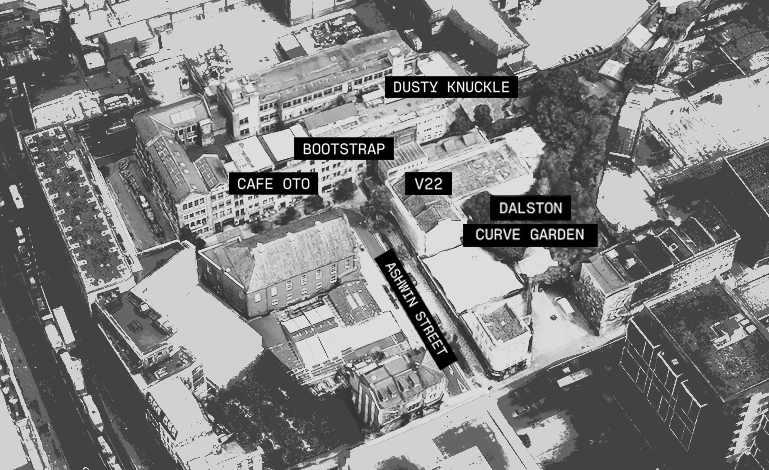
Dalston has always been a centre for creativity, enterprise and culture, with community at its heart. Now a number of the organisations located in and around Ashwin Street have come together as the ‘Dalston Cultural Quarter’ to ensure that the much-loved character of the area is retained and nurtured. We, the founding partners, Dalston Curve Garden, Bootstrap Charity, V22, Cafe Oto and Dusty Knuckle are committed to enhancing Dalston’s cultural diversity. Together, we have over a century of experience in local campaigning, arts programming, building community resilience, entrepreneurship, creating employment and shaping spaces that make people feel good. We all share a profound commitment to social justice and to making Dalston an even better place.
-
The Dusty Knuckle Bakery started life in a single 40Ft container in Bootstrap’s yard 10 years ago, with the intention of helping young people into employment by making the best bread in London. The social enterprise has grown to employ over 100 people across 3 sites, supports over 65 trainees a year, and won Time Out’s award for London’s best neighbourhood bakery, and has been awarded a King's Award for Enterprise for its outstanding work in promoting opportunity and social mobility.
-
Bootstrap Charity has been home to social entrepreneurs, small businesses, and charities for nearly 50 years, with a family of 75 tenants in the creative, social, and hospitality industries across 3 buildings. The combination of place and people generates a distinct energy and warmth. Bootstrap believes that good people can make the world a better place, and we reflect this in the way we work together and care for each other. Bootstrap Charity offers its charity tenants cheaper rents and funds its social enterprise tenants to run employment programmes, and draws on its tenants to mentor and offer industry expertise.
-
Cafe OTO, founded in 2008 at Bootstrap, is an internationally renowned independent music venue dedicated to creative and experimental music. Conceived as a community-focused space, OTO (Japanese for "sound") serves as a vital clubhouse for artists and enthusiasts of free jazz, avant-garde, noise, and more. The venue has hosted legends like Yoko Ono and Thurston Moore and is celebrated for its programming, multi-night artist residencies, and in-house record labels (OtoRoku and TakuRoku).
-
V22 was established in 2005 in the heart of Dalston’s creative quarter to offer affordable studios for artists and makers. Rooted in cultural, social and spatial sustainability, V22 enables creative work, fosters collaboration, and helps protect artistic spaces in London’s rapidly changing cultural landscape. In June 2025, V22 bought its Ashwin Street home, securing the long-term future for this vital creative hub. Today, V22 operates eight buildings across London, supporting more than 300 studio spaces.
-
Dalston Eastern Curve Garden is a much-loved community green space in the heart of Hackney. Created in 2010 on a disused railway cutting, The Garden transformed this neglected strip of land into a thriving community asset.
The Garden offers a rare pocket of greenery in a dense urban neighbourhood, providing a welcoming space for people of all ages and backgrounds. With winding paths, abundant planting, a café, and a programme of events and activities, it draws together local residents, families, and visitors throughout the year.
In addition to being a green space, it functions as a community hub, hosting community support gatherings, workshops, performances and seasonal celebrations that reflect the diversity and creativity of Dalston. It has become a cherished gathering place that strengthens social bonds and supports local wellbeing.
The garden is managed by a social enterprise and generates most of its income from the onsite cafe/bar. It also relies on community support, volunteers and fundraising to sustain its work. It stands as a powerful example of what communities can achieve when they reclaim underused urban space, and a reminder of how much green, social infrastructure matters in city life.